Wine Trails: Verona and Its Surrounds
Known for its Valpolicella, Soave and Bardolino wines, Northern Italy’s Veneto region combines historical landmarks with some of the country’s best wines. Alessandra Piubello explores Verona, its surrounding vineyards, and the nearby shores of Lake Garda
A romantic UNESCO heritage city nestled among the meandering bends of the Adige river, Verona is a treasure trove of historical beauty, and the setting for Italy’s most famous love story. “There is no world without Verona walls, but purgatory, torture, hell itself,” as Shakespeare wrote in Romeo and Juliet.
Take a stroll on Piazza Bra on a summer evening, and you’ll hear music floating in the air from the city’s arena, one of the world’s best preserved Roman amphitheatre. Walking around the city, there are traces of over 2,200 years of history everywhere, from Roman remains to medieval monuments (the Basilica di San Zeno, a masterpiece of Romanesque art, is a must-see), and from the Gothic Scaliger Tombs (built for the House Della Scala family, who ruled in Verona in the 13th and 14th centuries) to Venetian palazzi and Habsburg fortresses.
Verona not only boasts a wealth of striking landmarks, but also a centuries-old culinary tradition that stems from the kitchens of local lords, and is rich in typical products, from gnocchi to pandoro. It is also, of course, a wine capital: recognised as an “International City of Vine and Wine,” Verona is home to world-renowned wines including Amarone and Soave, as well as Vinitaly, the first ever international wine fair – still among the largest in the world.
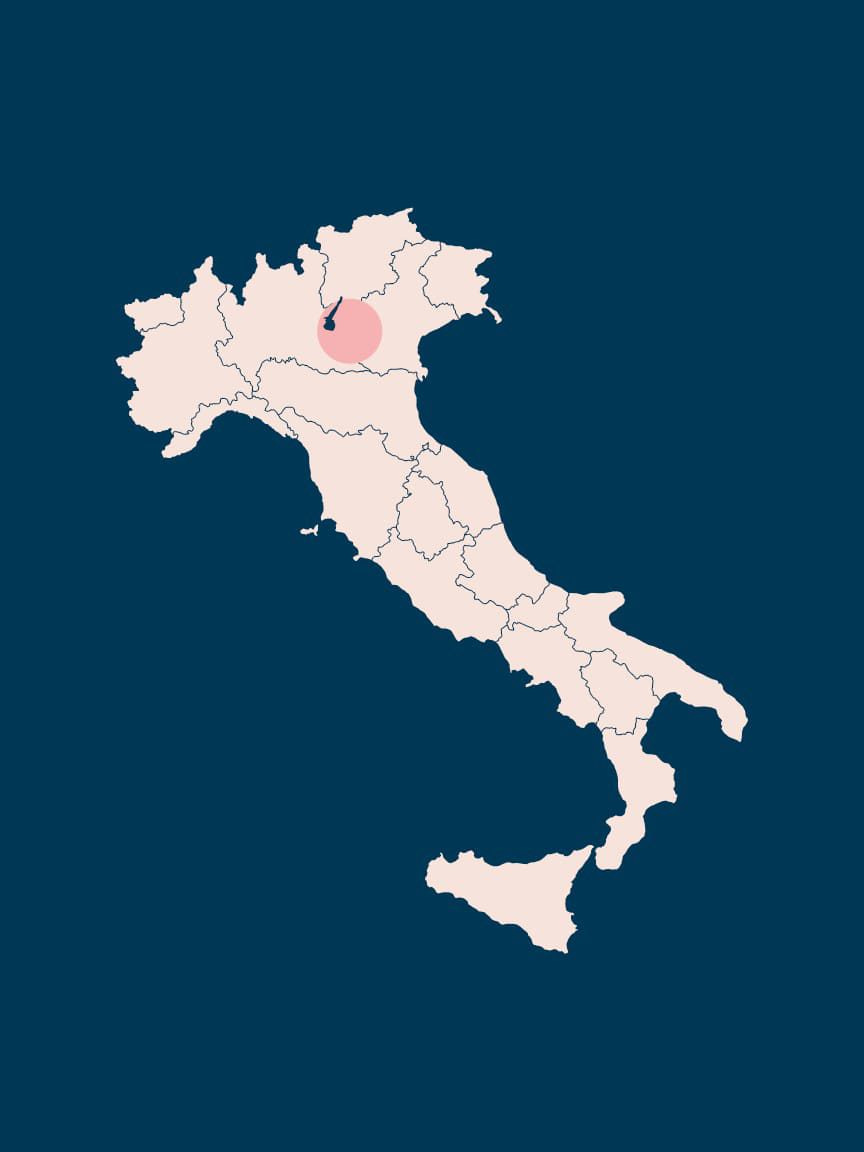
Venturing out of Verona, one can admire the historic winemaking tradition of its surroundings: Soave, 20 km east; Valpolicella, a few kilometres northwest; Bardolino, 30 km northwest overlooking Lake Garda; and Lugana, 40 km west.
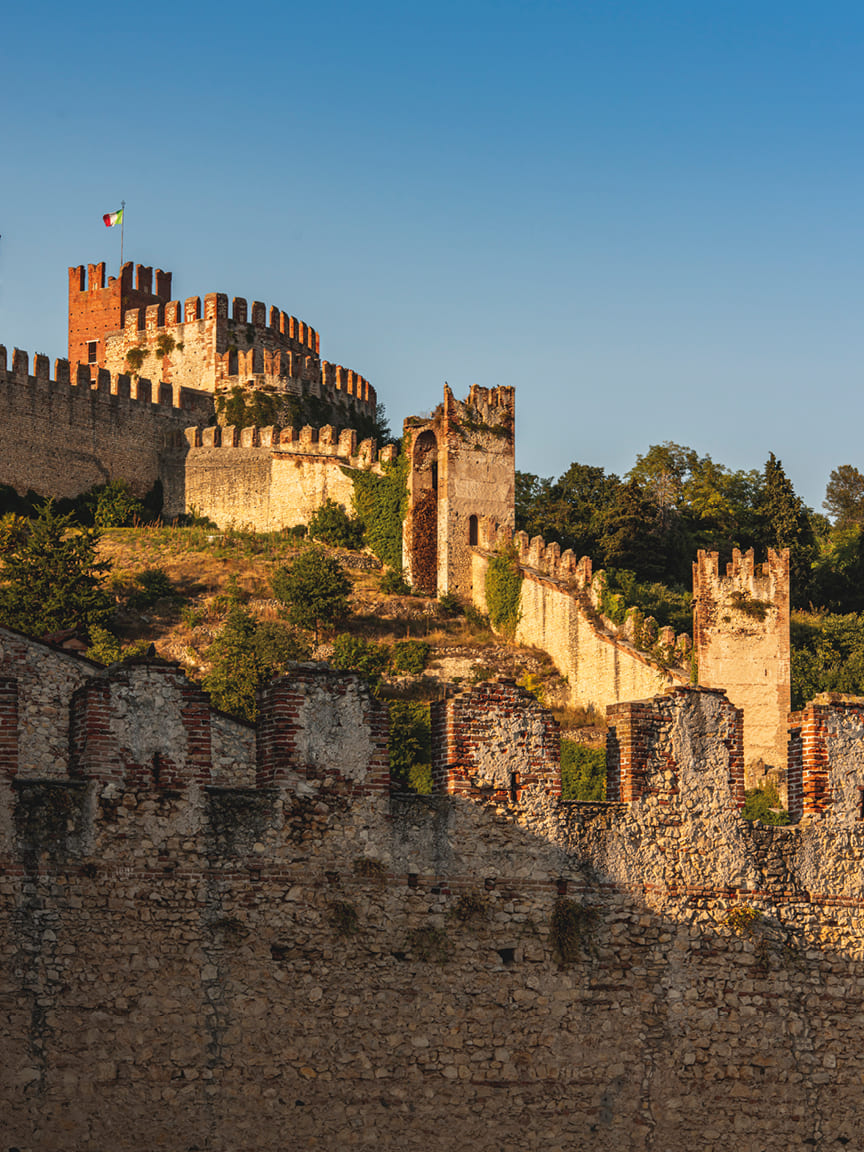
Soave is a medieval town with alleys and arcades that are a pleasure to discover. Its hilltop castle is one of Veneto’s most beautiful, with truly unique views from the ramparts overlooking the vineyards below. The wine from these lands is white, made mainly from Garganega grapes.
Meanwhile, Valpolicella, whose hills are dotted with Renaissance villas surrounded by beautiful gardens and impressive parks, produces four red wines: Amarone, Valpolicella, Valpolicella Ripasso and Recioto, brothers made from the same grapes (Corvina, Corvinone, Rondinella) but with different winemaking techniques.
Then at Lake Garda, the charming town of Bardolino offers a choice between culture, gastronomy, sports (rowing, windsurfing, sailing) and local wine tasting: a Bardolino red or a Chiaretto rosé, both made from Corvina, but vinified differently. On the southwest side of the lake, one can sip white Lugana made from Turbiana grapes. Verona and its surroundings are masters in the art of evoking unique emotions.
Wineries to Visit
Whether boasting hilltop views or housed in Renaissance villas, the region’s leading wineries offer both stunning settings and world-renowned wines.
Allegrini, Valpolicella
Visit the picturesque vineyards of Allegrini in Valpolicella, a benchmark producer of structured and elegant Amarone, and a leader in terroir-driven IGT wines, where tradition and innovation shape every bottle.
Pieropan, Soave
Set amid Soave Classico vineyards, Pieropan (see p10) harnesses cutting-edge technology and research to produce top quality wines – an authentic expression of the terroir in a glass.
Santa Sofia, San Pietroin Cariano, Verona
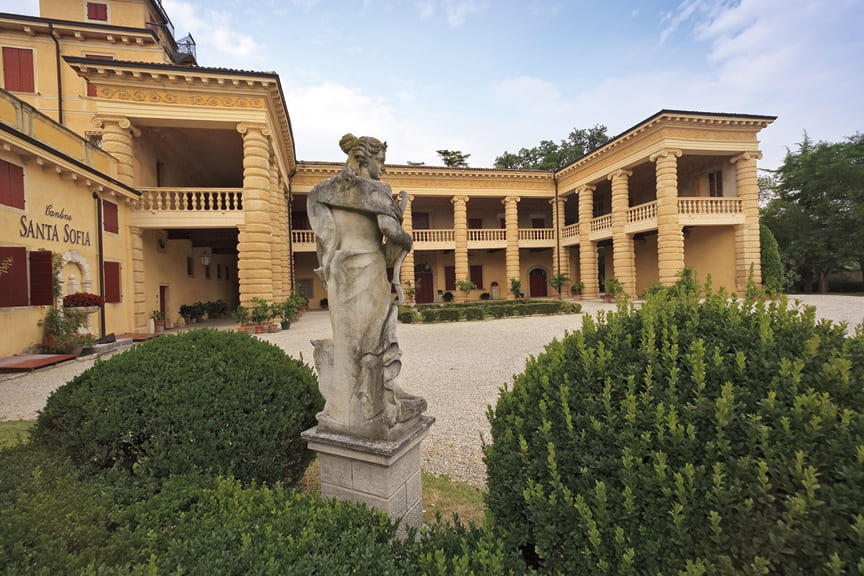
A UNESCO World Heritage villa set in a stunning park and designed by the renowned Renaissance architect Palladio. Here, traditional and elegant wines are meticulously crafted and aged in the estate’s 14th-century cellars.
Tenuta Santa Maria Gaetano Bertani, Negrar
Located near the picturesque village of Arbizzano di Negrar, this Venetian-style 18th-century villa comes with 16th-century cellars, where in 1936 the first Amarone wine was produced. With a long family winemaking tradition, the estate offers classic Valpolicella wines.
Ottella, Peschiera del Garda
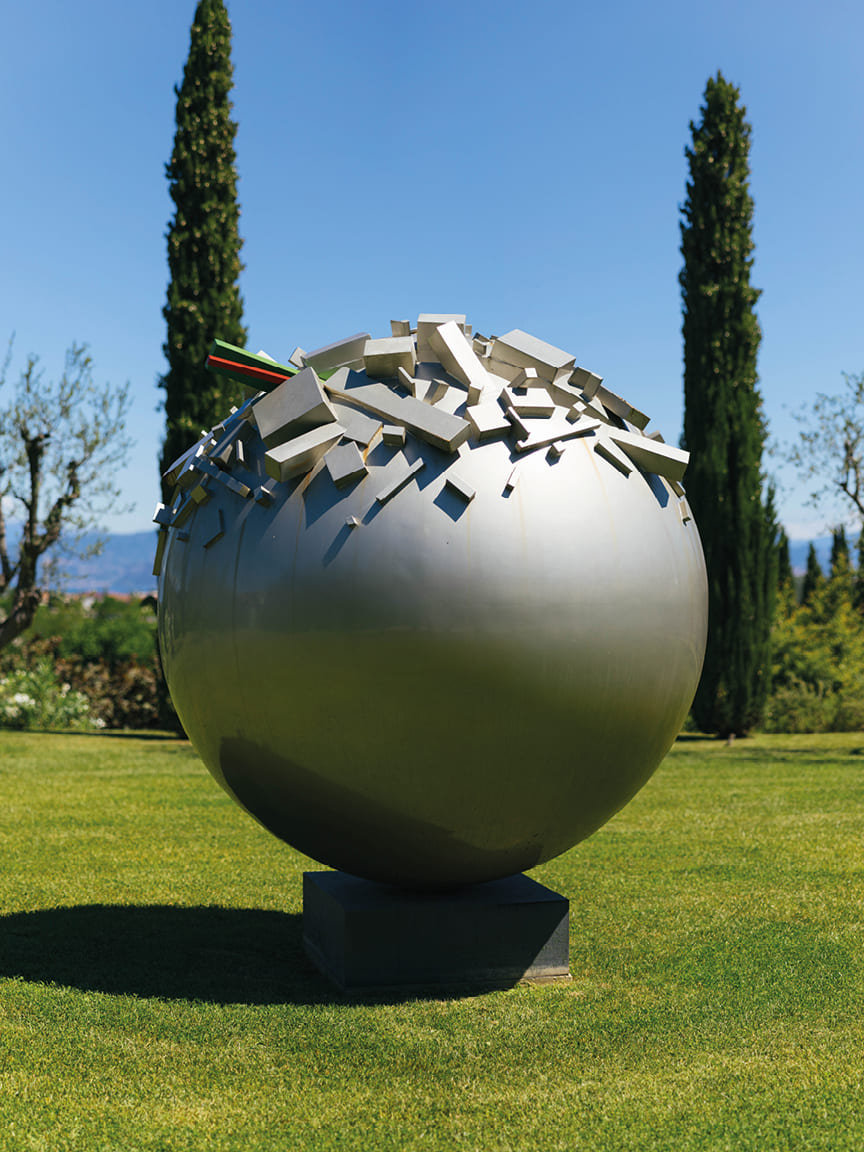
At Ottella, in the land of Lugana where the Montresor family has ancient roots, wine, art, nature and culture merge to offer a memorable experience.
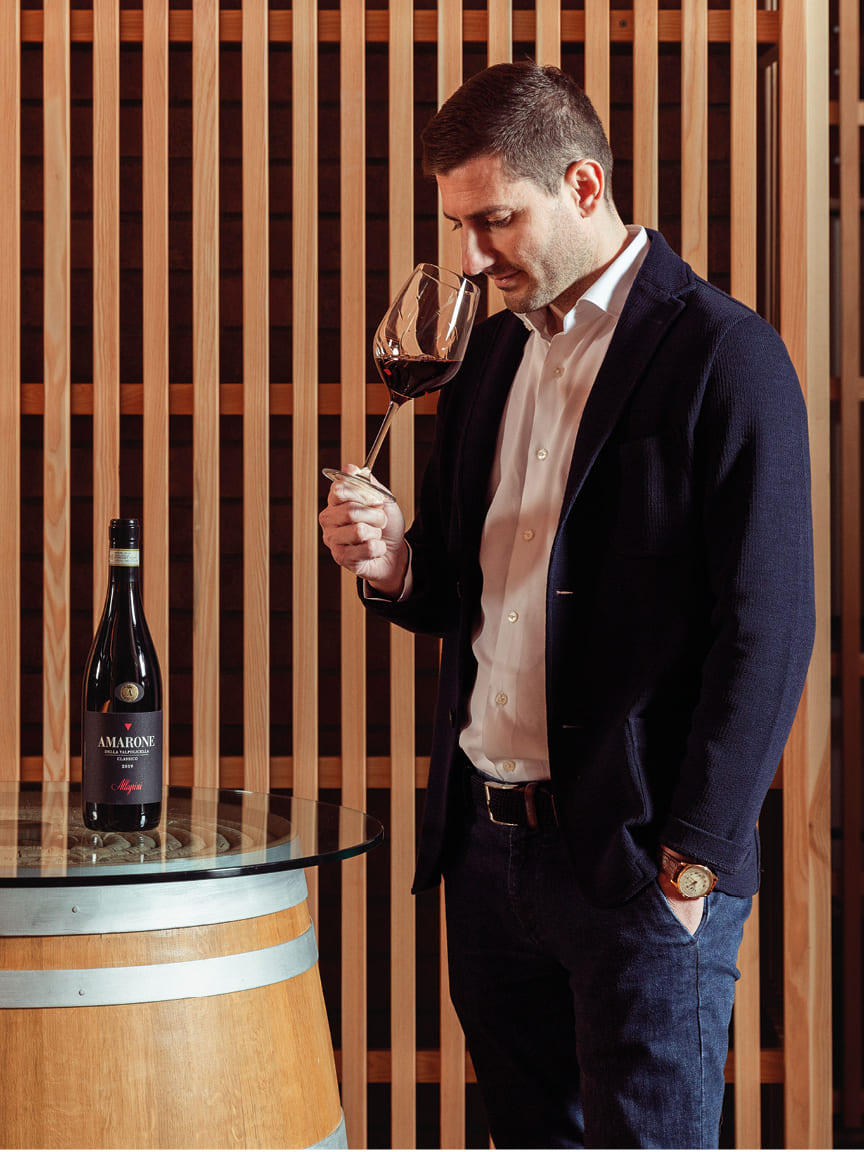
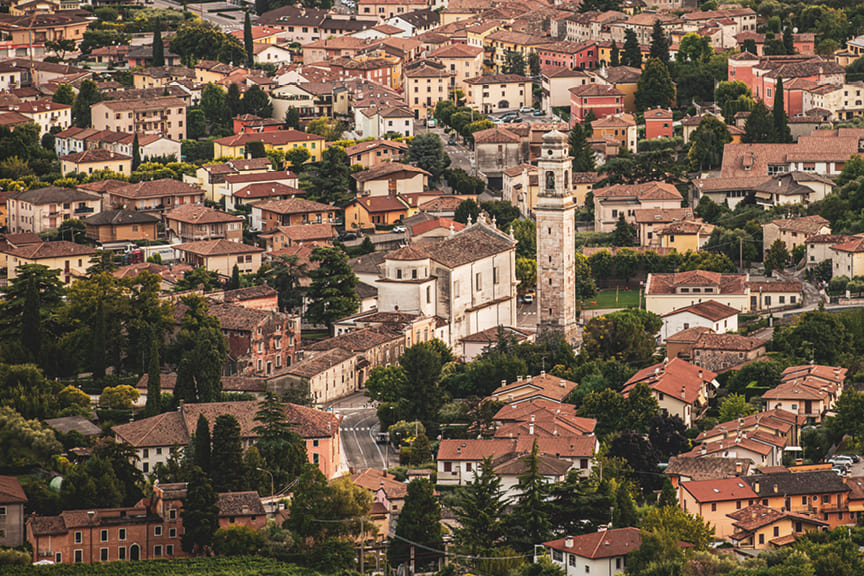
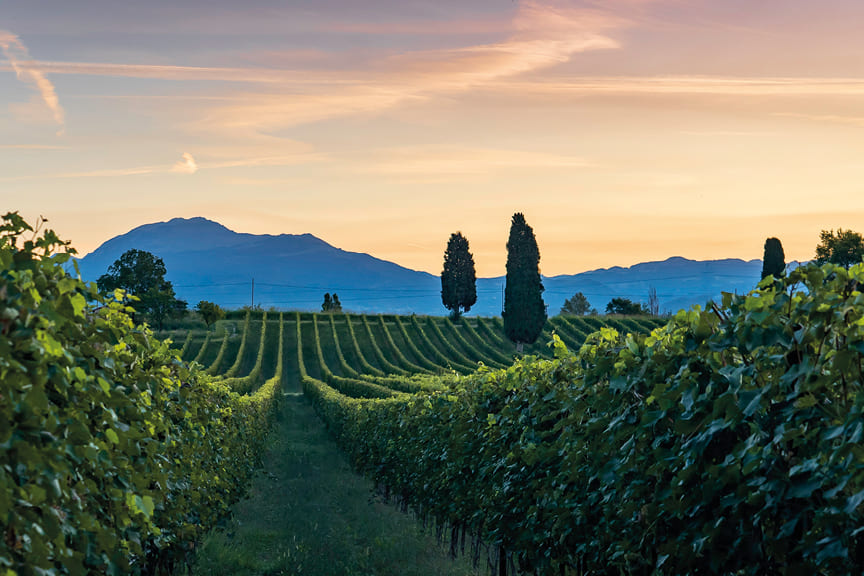
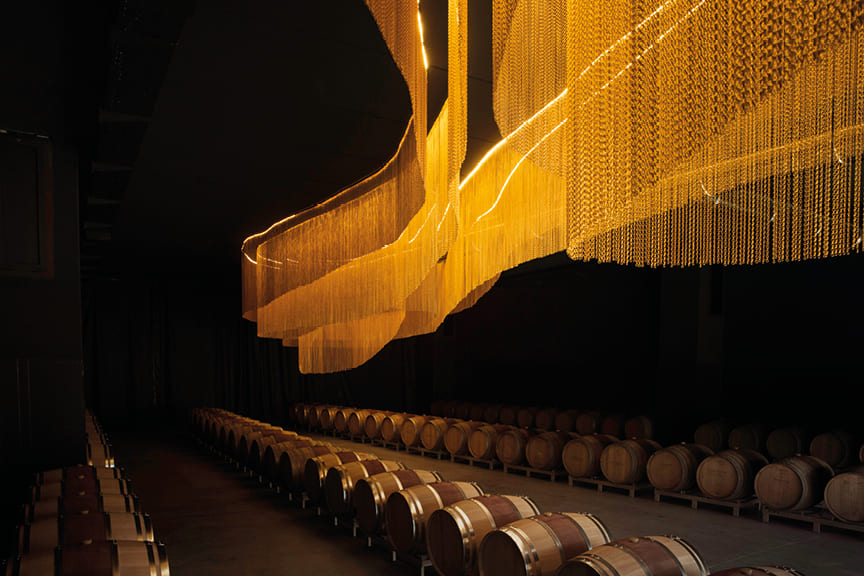
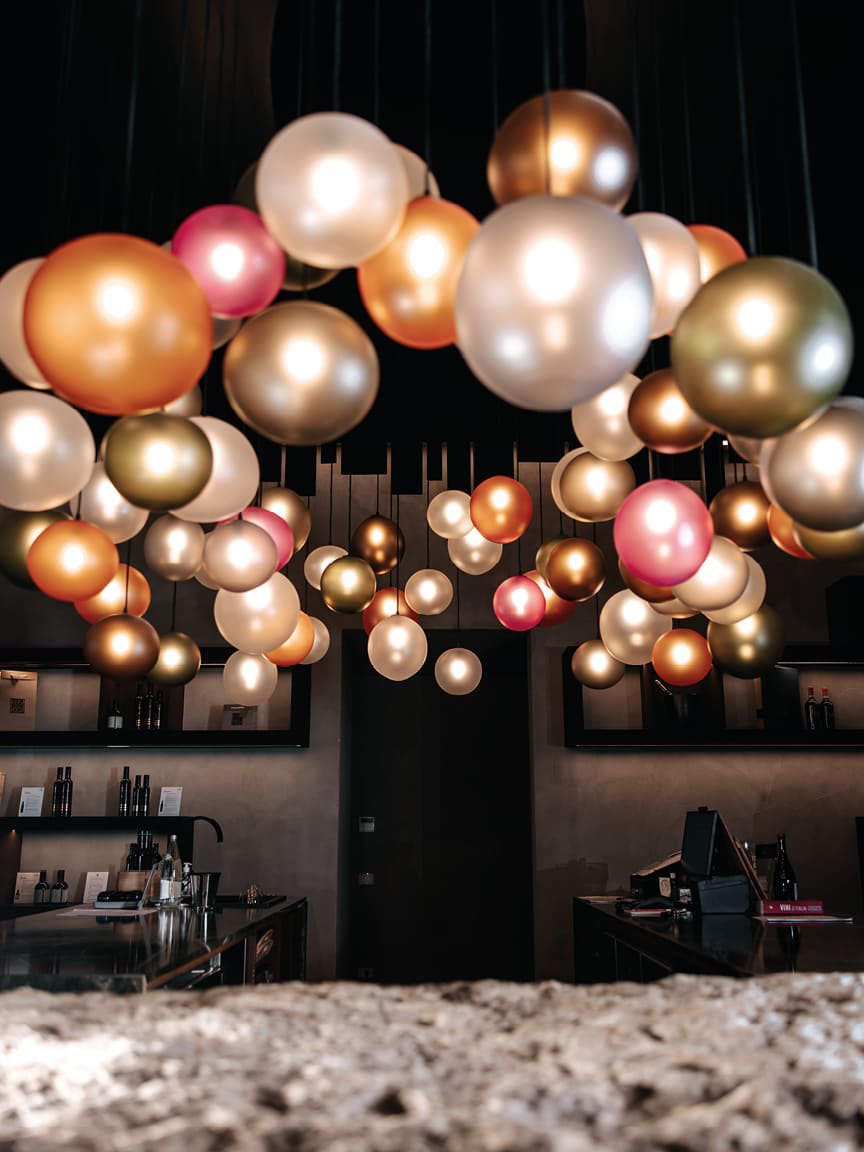
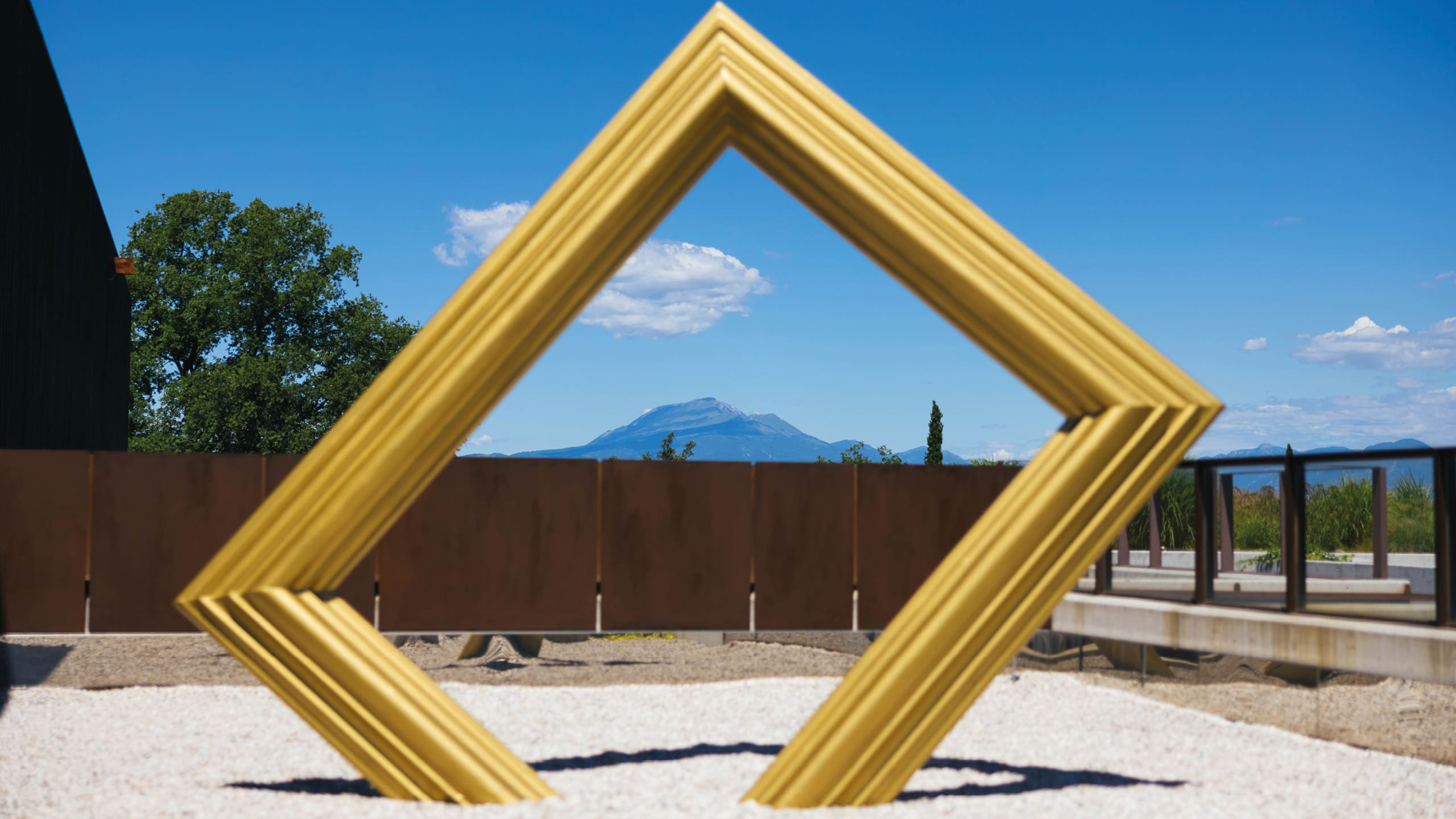
The Allegrini vineyards, nestled in Valpolicella’s rolling hills, produce exceptional Amarone della
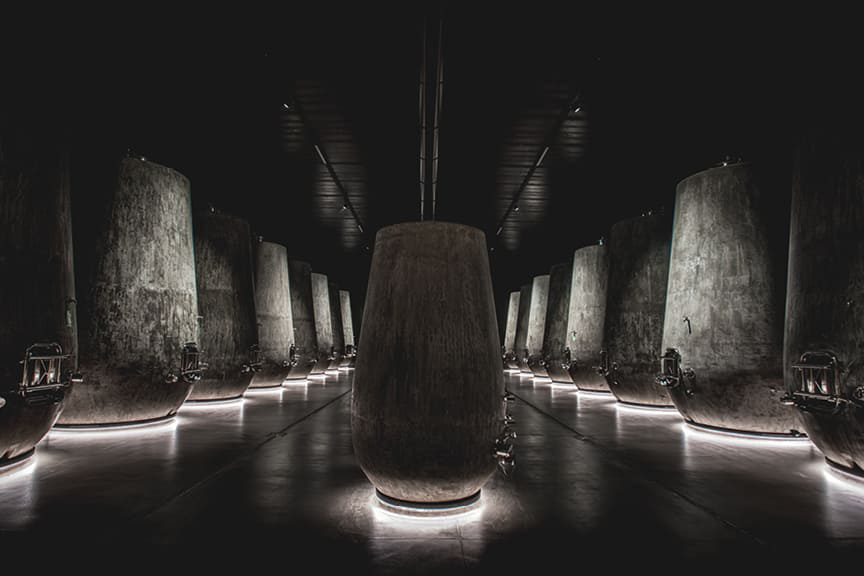
Valpolicella, and Francesco Allegrini, the winery’s head winemaker. Pieropan cellars in Soave;
Santa Sofia Cellars is set in park and designed by the Renaissance architect Palladio; and wine,
art, nature and culture merge at Ottella
Where to Eat
Traditional Veronese specialties are accompanied by more elaborate and creative cuisines.
Antica Bottega del Vino, Verona
Sample local wines, as well as traditional and re-interpreted dishes, in a historic building dating back to the 1500s in the heart of the city.
A true temple of wine, not to be missed.
L’Oste Scuro, Verona
Fresh fish is the speciality of this elegant eatery, a family trattoria located a stone’s throw from Castelvecchio. Don’t miss the seafood starters, including oysters and caviar.
Iris, Verona
In a historic palazzo, chef Giacomo Sacchetto offers creative and innovative cuisine interspersed with authentic details in the refined setting of a Michelin-star restaurant.
Enoteca della Valpolicella, Fumane
Surrounded by vineyards in the Valpolicella area, this osteria offers traditional, genuine and inspired cuisine prepared with great care and respect for the ingredients.
La Taverna da Oreste
The historic lakeside restaurant in Lazise has been serving exquisite seafood and regional specialties since 1907, offering guests stunning views of Lake Garda.
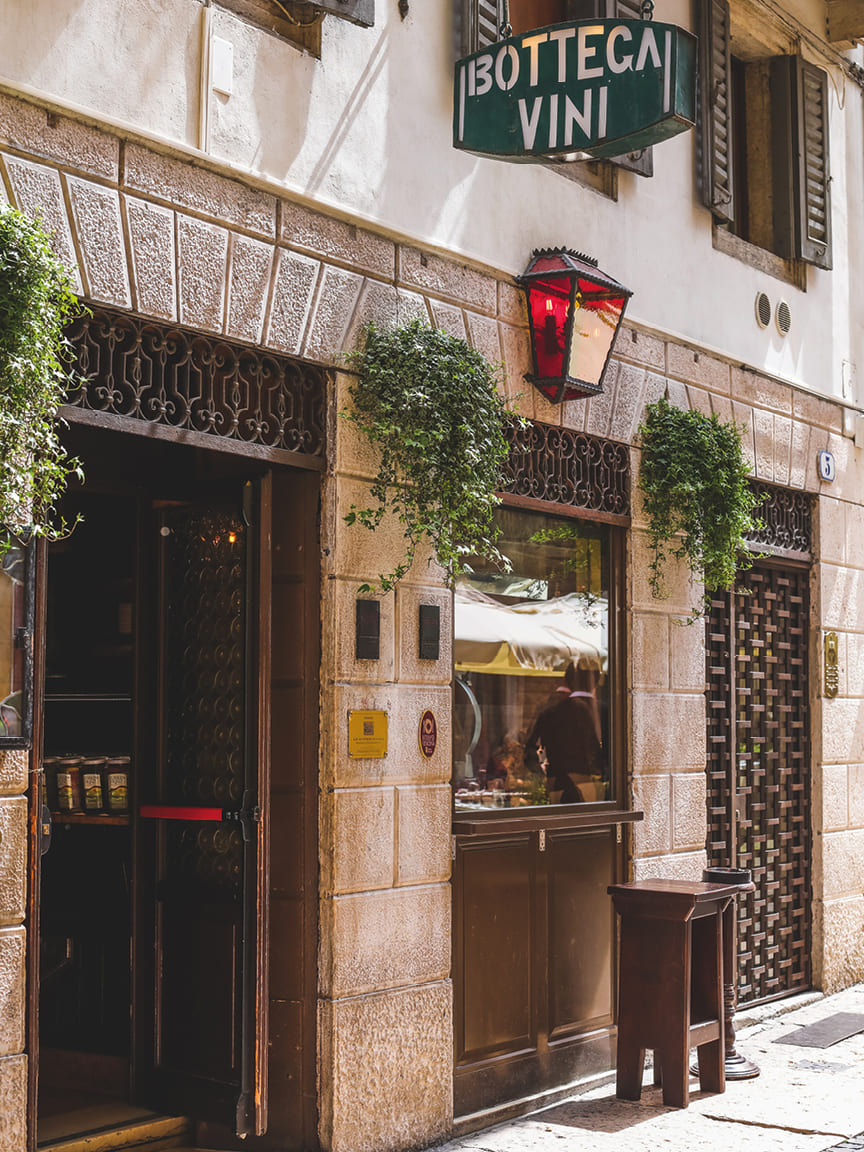
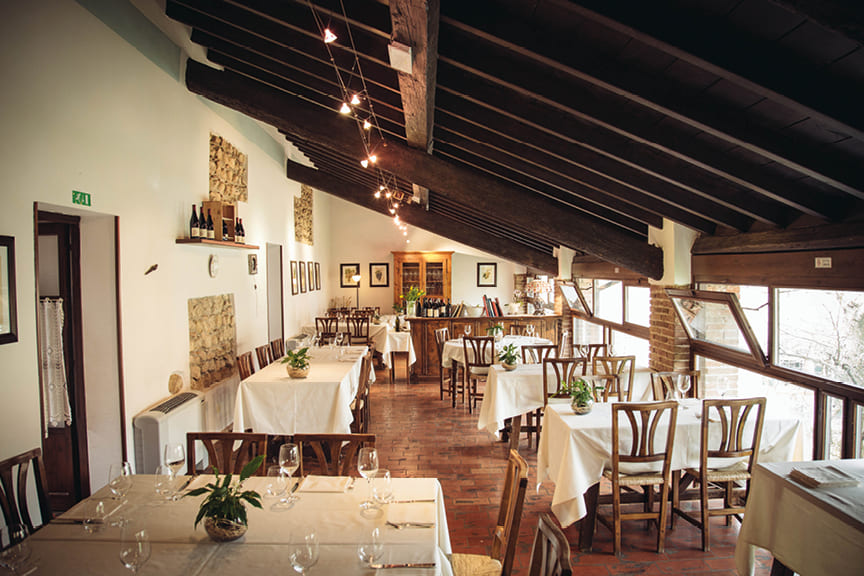
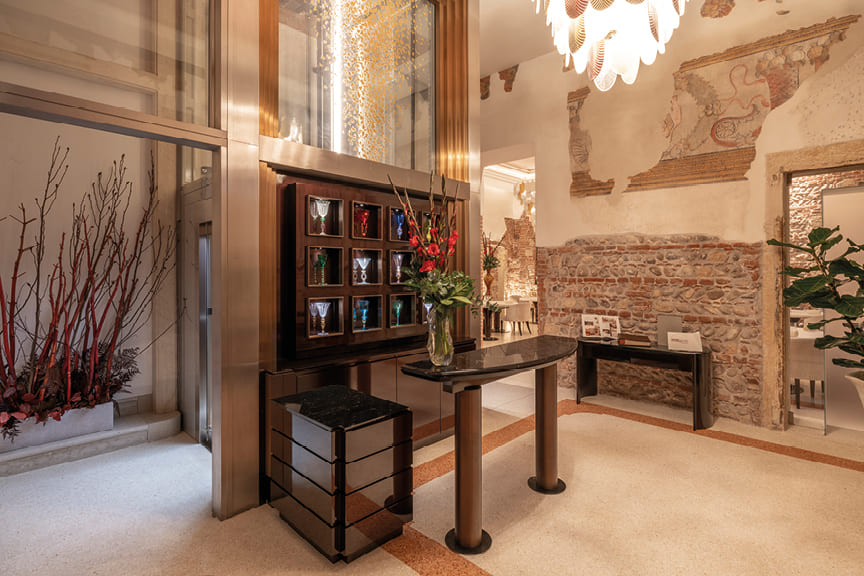
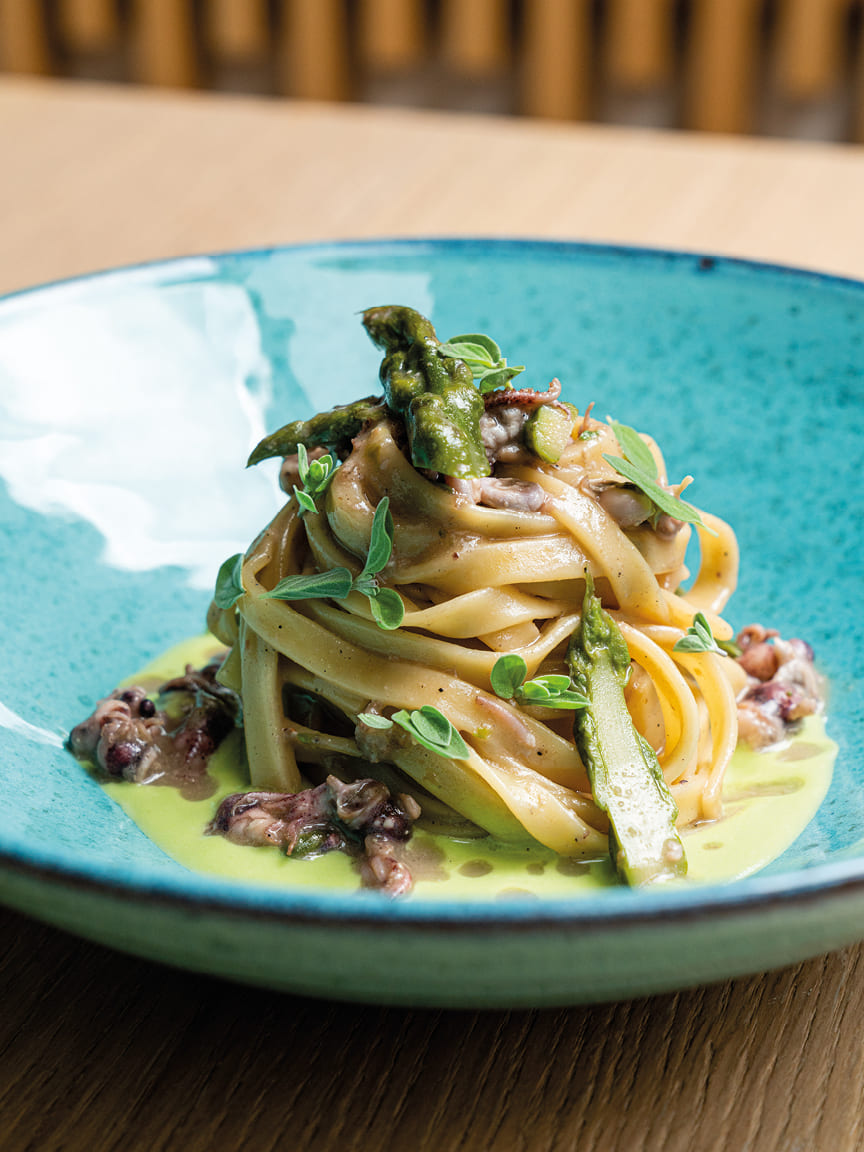

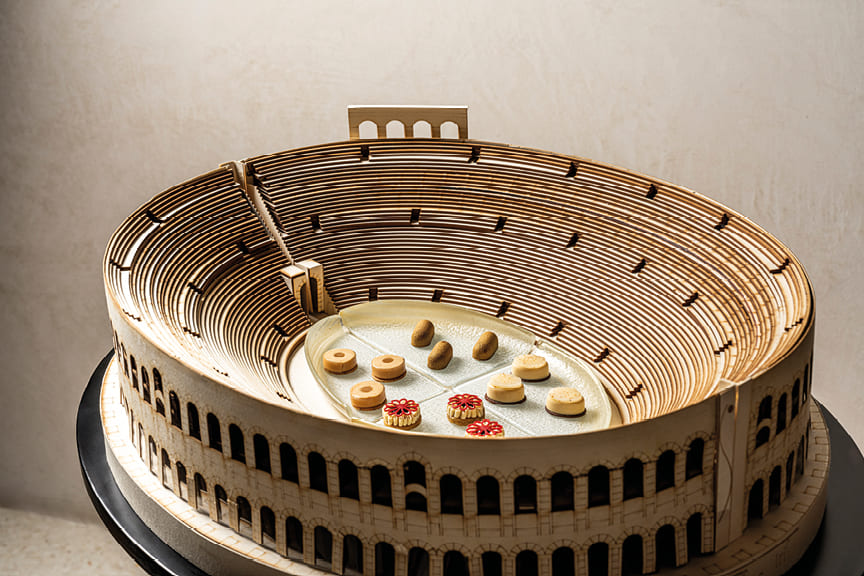
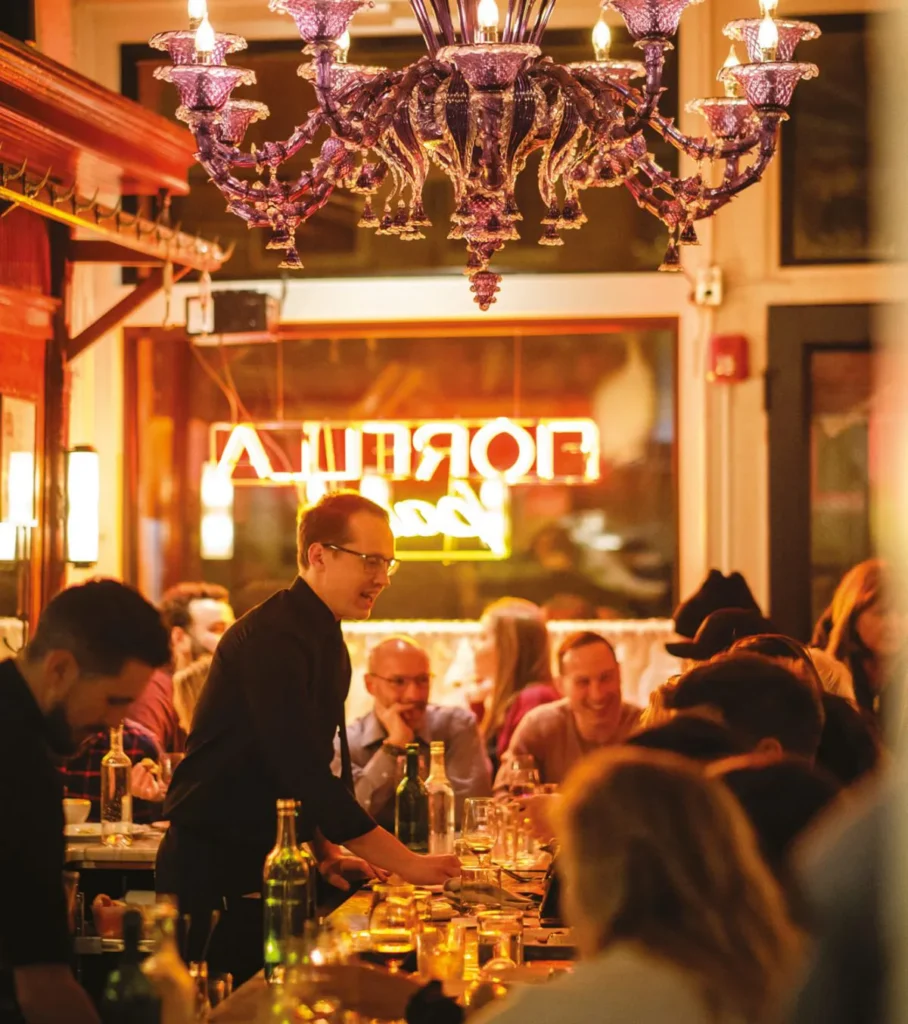
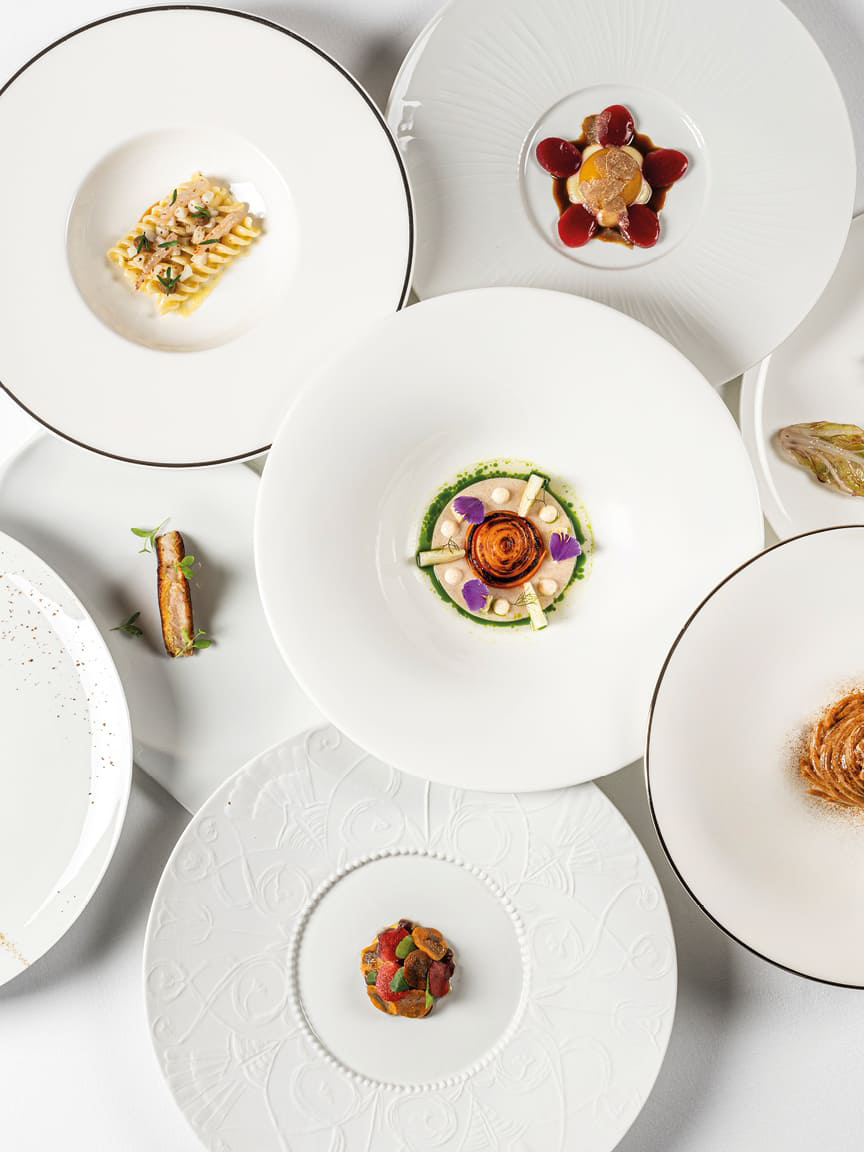
Antica Bottega del Vino in Verona is a true temple of wine. Enjoy traditional food at Enoteca
della Valpolicella, a dish of Spaghettini Senatore Cappelli at L’Oste Scuro in Verona, and Iris,
another Veronese gem nestled in a historic palazzo
Places to Stay
Verona’s hospitality offer is plentiful, with a wide range of choice at every level.
Vista Verona Hotel, Verona
The only hotel in the city’s historic center with an indoor pool and spa. Comfortable rooms in an eclectic style combine Italian design with furnishings by master craftsmen.
Relais Balcone di Giulietta, Verona
Elegant rooms overlooking Juliet’s balcony or Piazza delle Erbe. Exposed beams and 17th-century frescoes provide a unique atmosphere.
Residenza Ai Capitelli, Soave
In the heart of Soave, the hotel offers meticulously renovated, cosy and homely modern rooms with exposed beams and parquet floors. There’s also an outdoor swimming pool.
Byblos Art Hotel Villa Amistà, Corrubio
Filled with colorful modern artworks, this hotel is set in a 16th-century villa just outside Verona, and comes with wonderful gardens, a spa and a Michelin-star restaurant.
Villa dei Cedri Hotel, Colà di Lazise
This unique venue comprises an 18th-century residence surrounded by a vast park with lush vegetation, a greenhouse, lakes and thermal pools with hot springs. Relaxation guaranteed.
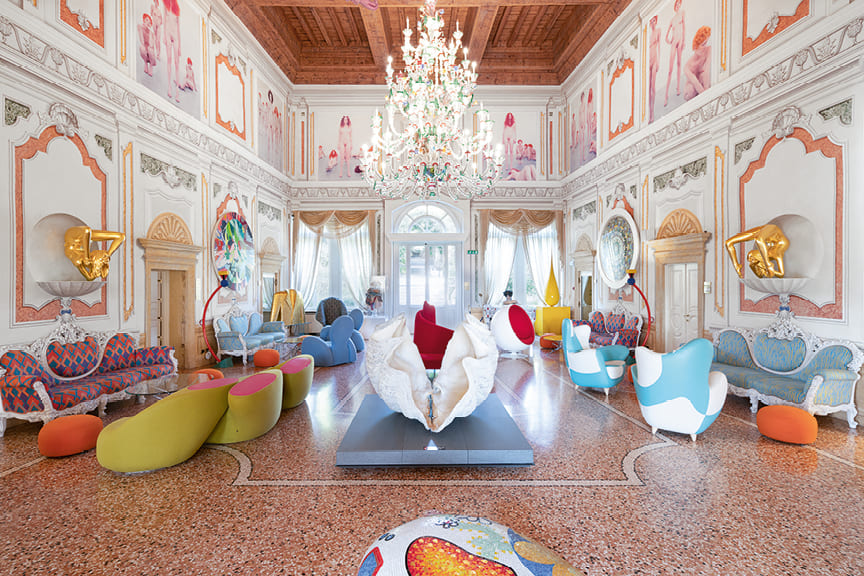
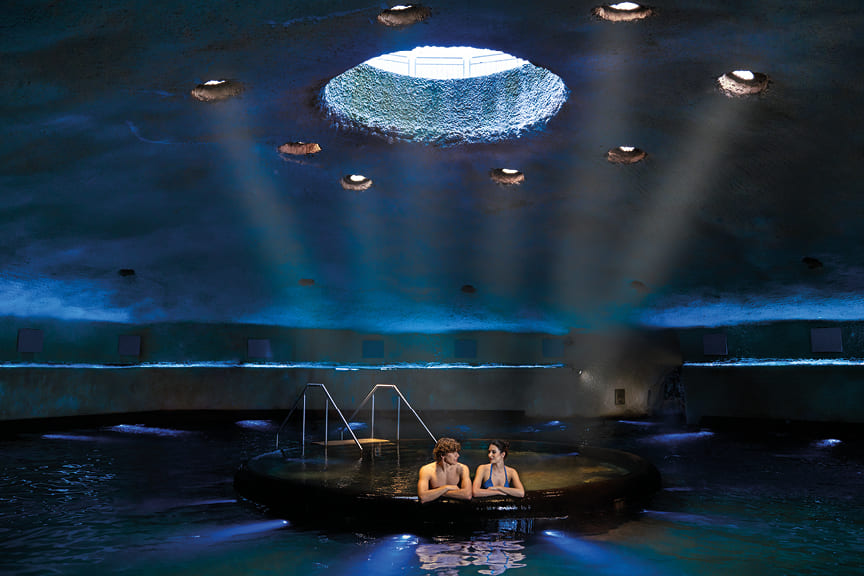
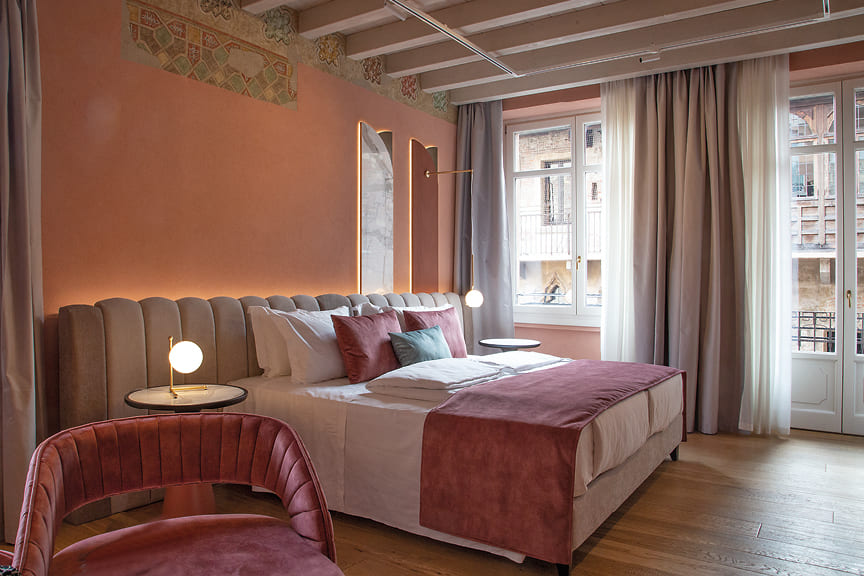
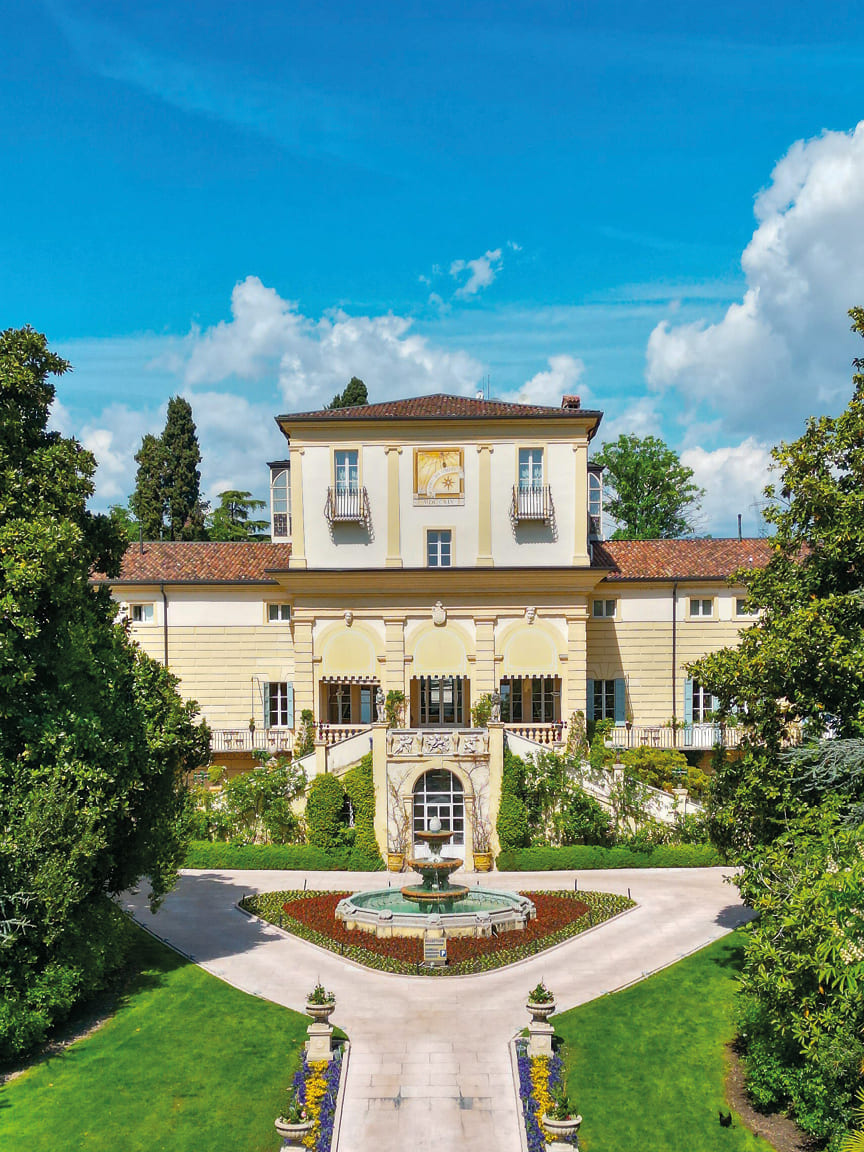
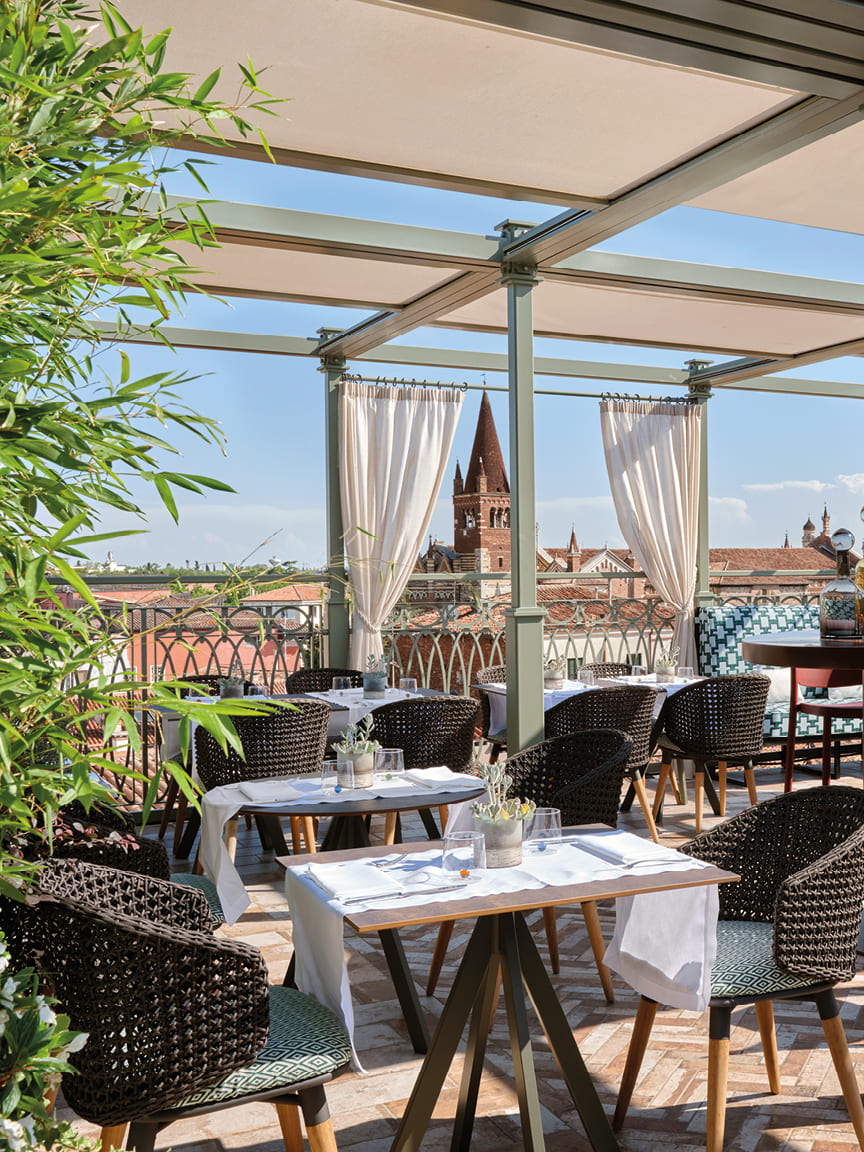
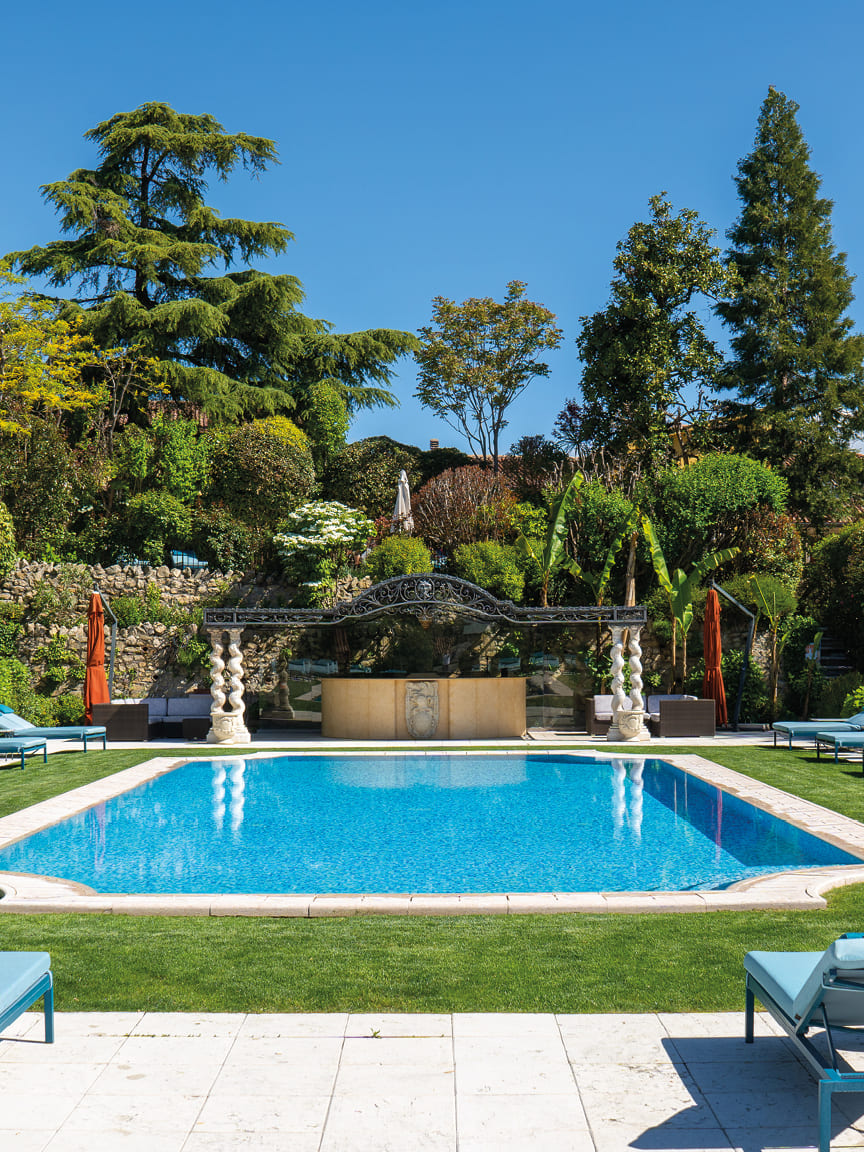
Byblos Art Hotel Villa Amistà is filled with colorful modern artworks. Vista Verona Hotel is the
only hotel in the city’s historic center with an indoor pool, Relais Balcone di Giulietta overlooks
Juliet’s balcony, the Villa dei Cedri Hotel sits within an 18th century park
Things to Do, Places to Discover
Verona and its surroundings offer countless attractions, including the ancient wonders of Verona Romana.
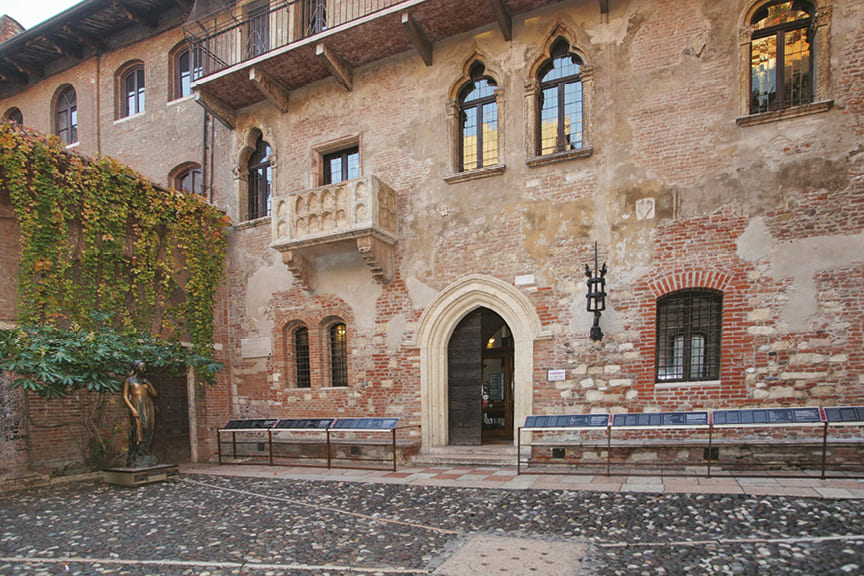
Juliet’s House, Verona
This medieval palace is known as the birthplace of Giulietta Capuleti, aka Romeo’s Juliet. Visit the museum, its famous balcony, and courtyard with a bronze statue of Juliet (it is said that touching it brings good luck in love).
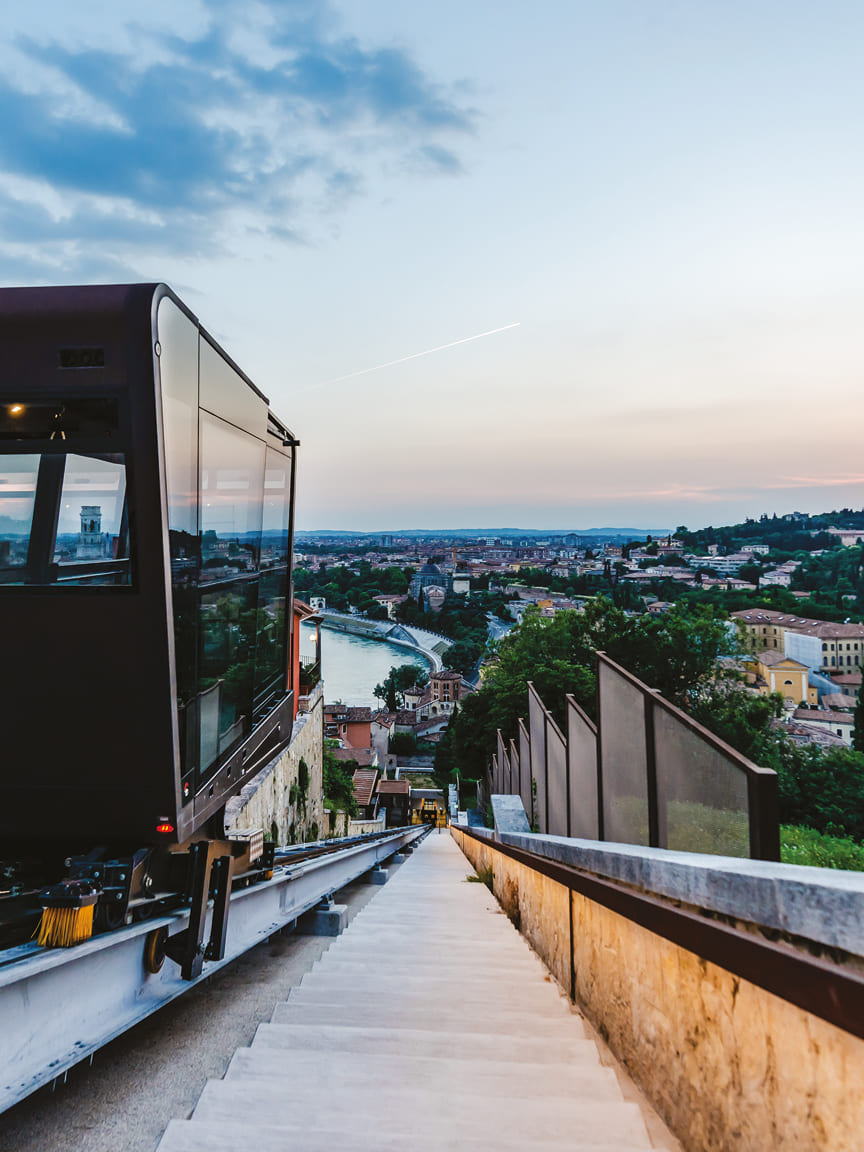
Funicolare di Castel San Pietro, Verona
Taking the funicular to Castel San Pietro is an effortless way to enjoy the beauty of Verona from above, with its tall cypress trees, bell towers and bridges.
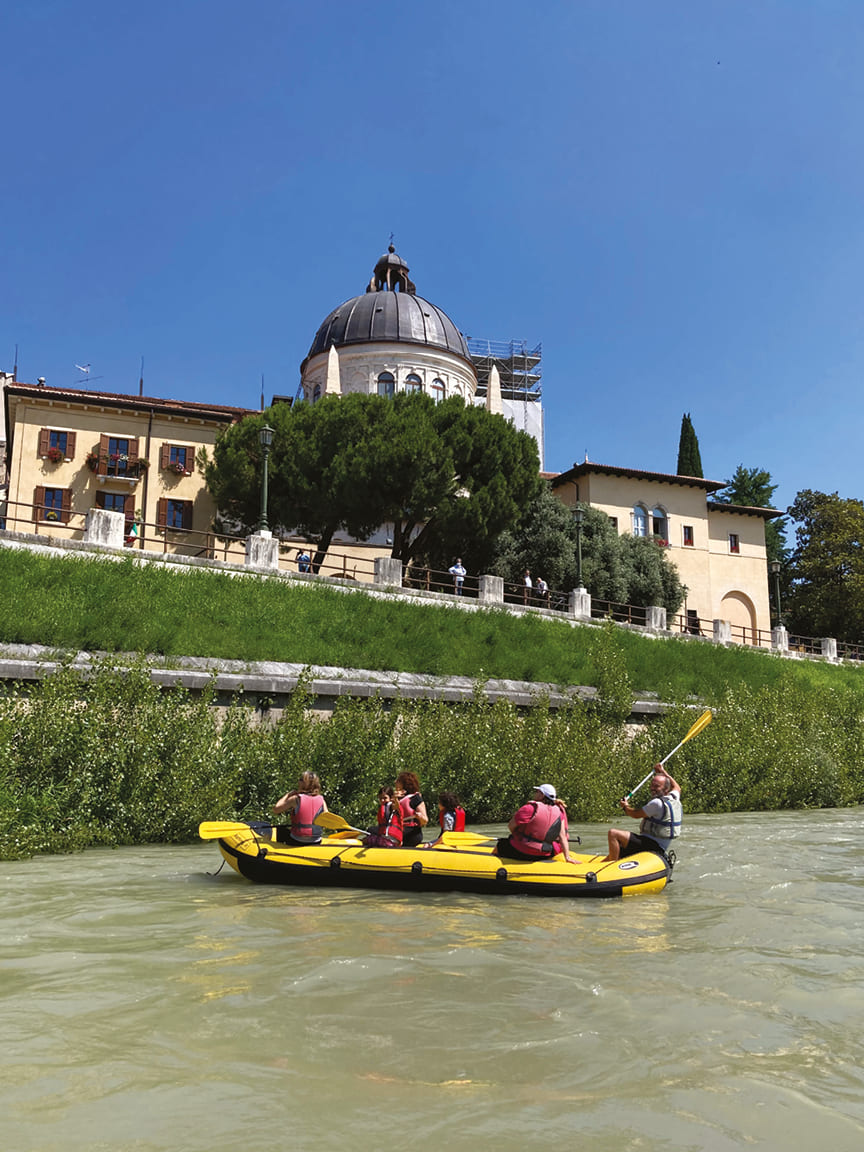
Adige Rafting, Verona
Seeing a city from the river that crosses it offers a singular and original perspective. Don’t miss the thrill of paddling and rafting down the Adige.
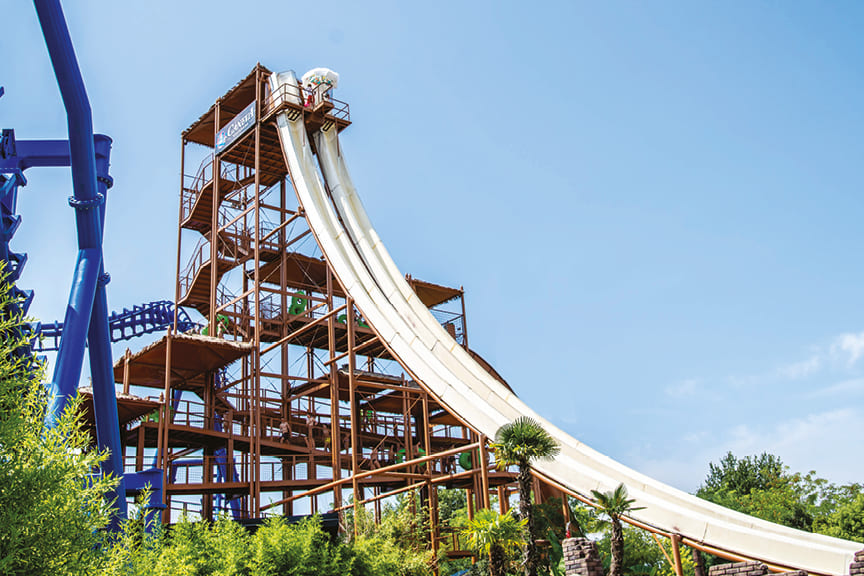
Amusement parks, Lake Garda
Caneva Aquapark, a water park with themed attractions, and Gardaland, a popular theme park for young and old, are both located near Peschiera del Garda.
Giardino Giusti, Verona
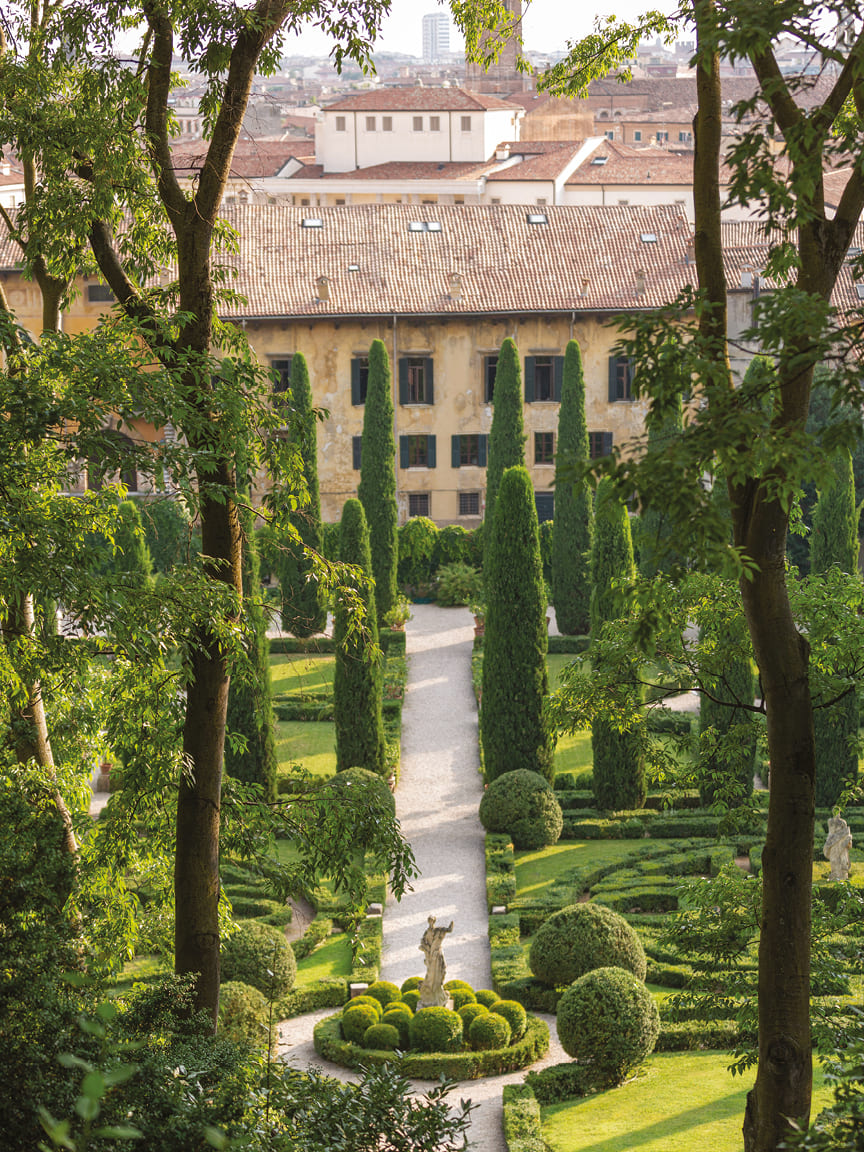
This precious 16th-century garden is a must-see stop with various species of ancient trees, mythological statues, fountains, grottoes, Roman artifacts and an observation deck to admire the views.
The Te Hoiere/Pelorus River, a swimming and kayaking destination, the Havelock Marina, the Omaka
Aviation Heritage Centre is one of the world's largest private collection of Great War aircrafts,
the Queen Charlotte Track, and a boat heading to the Motuara Bird Sanctuary, a predator-free
island in the Marlborough Sounds
Photography ©individual establishments. Pieropan ©Spinach Branding for Maze Row

For the adventurers, bon vivants, and the passionate connoisseurs